In an older bathroom, the most important improvements are often the ones you cannot see in the finished photos. Tile and fixtures shape the style, but ventilation, water control, plumbing, and electrical work determine how the room performs over time.
That does not mean every older bathroom needs to be rebuilt from the framing. It means the visible design should be planned together with the condition of the room behind it.
Begin with moisture
Bathrooms regularly produce warm, humid air. If that moisture cannot leave the room, paint, trim, cabinets, and wall materials can suffer. During the walkthrough, discuss whether the existing exhaust fan works well, where it vents, and whether the room stays damp after a shower.
Water protection around the tub or shower deserves the same attention. The finished tile is not the waterproofing system by itself. Ask how the wet area will be prepared and what will be done around corners, penetrations, and transitions.
Visible stains, soft flooring, loose tile, or recurring caulk failure can be signs that more investigation is needed. They do not automatically reveal the full extent of a problem, so the project scope should leave room to address concealed damage if it is discovered.
Review plumbing before selecting fixtures
An older valve, supply line, drain, or shutoff may be difficult to reach once the new finishes are installed. It is worth reviewing these items while the room is open.
Fixture choices can also affect the work. A wall-mounted faucet, freestanding tub, larger shower, or relocated toilet may need different preparation than a straightforward replacement. Choose the general fixture types early, even if the exact model comes later.
Plan electrical needs around real routines
Count what is plugged in during a normal morning. Hair tools, electric toothbrushes, shavers, chargers, and other devices can quickly exceed the useful outlet space in an older room. Lighting should also serve more than one purpose.
A practical plan often includes general room lighting, focused light near the mirror, and appropriate lighting in the shower or tub area. Electrical work in a bathroom has specific safety requirements, so it should be evaluated for the actual scope rather than treated as a decorative afterthought.
Improve the room without making it harder to use
A larger vanity is not always an improvement if it narrows the walkway or blocks a door. Before finalizing the layout, check the space needed to open drawers, enter the shower, use the toilet comfortably, and clean around fixtures.
Think about the next several years, not only the day the remodel is completed. A handheld shower, useful blocking inside a wall, easier-to-reach storage, and a comfortable entry can make the room more flexible without making it look institutional.
Build storage around the room
Older bathrooms are often small, so storage needs to be intentional. Make a list of daily items, extra towels, paper products, cleaning supplies, and anything that should be kept away from children. Then decide which items need enclosed storage and which can stay visible.
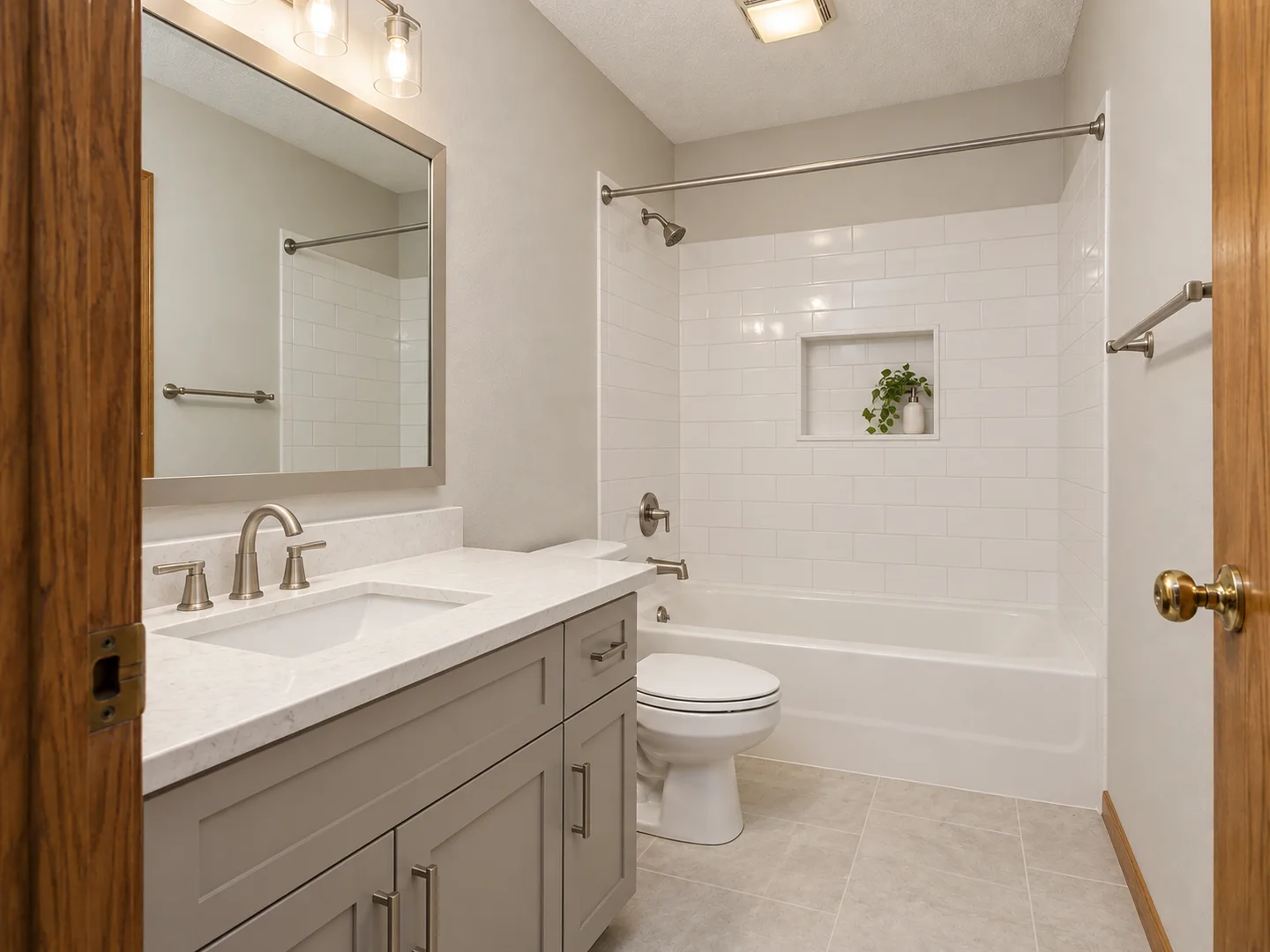
- Recessed medicine cabinets can add storage without taking floor area.
- Vanity drawers may be easier to use than deep cabinet doors.
- A shower niche should be sized for the products actually used.
- Hooks can be more practical than a long towel bar in a tight room.
Choose durable finishes with maintenance in mind
Ask how much regular cleaning and sealing a material needs. A finish that looks good in a showroom may be frustrating if it shows every water spot or requires maintenance you do not want to perform.
Slip resistance, grout layout, edge details, and transitions matter as much as color. Samples should be viewed in the room’s actual light when possible because warm and cool lighting can change how a finish appears.
A successful bathroom remodel is not simply a collection of new products. It is a coordinated system that manages water, supports daily routines, and fits the existing home. Address those fundamentals first, and the design choices become much easier to make.